Electric Thermal Storage
Reducing emissions from heating in the Yukon.
Space heating is the Yukon’s second biggest source of carbon emissions. Let’s work together to change that.
What is Electric Thermal Storage?

Electric Thermal Storage (ETS) is an electric space heating system. ETS heaters are great at taking advantage of renewable energy, like hydropower and wind. This makes them a good fit for areas that use a mix of renewables and fossil fuels, which includes most Yukon communities.
For most Yukoners, about 90% of your electricity comes from renewable hydropower. This is true for all but five Yukon communities (Old Crow, Burwash Landing, Destruction Bay, Beaver Creek, and Watson Lake). On cold winter days, when many people are trying to heat their homes and turn on appliances as they wake up or arrive home from school and work, the demand on our electrical grid is higher than what our hydropower can provide. To meet our energy needs during periods of high demand, known as “peaks,” the utility burns more fossil fuels.
Electric thermal storage (ETS) heaters draw electricity at off-peak hours, meaning times when our electricity comes mainly from renewables. The more people draw their electricity at off-peak times, the less fossil fuels the utility burns. ETS heaters work by using electricity to warm up ceramic bricks, insulating them until their heat is needed, and then releasing the heat to warm up your home.
What is the Electric Thermal Storage Demonstration Project?

The Yukon Conservation Society recently completed a study called the Electric Thermal Storage Demonstration Project, in which we installed and monitored ETS heaters in Yukon homes. The purpose of the Demonstration Project was to determine whether ETS is able to shift peak demand, thereby reducing carbon emissions.
YCS facilitated training for local contractors, who then installed ETS heaters in 45 homes. All of these homes adopted ETS as their primary heating source. We monitored the performance of the ETS heaters during Winter 2021 and Winter 2022.
The study period has now ended. In collaboration with our project partners, we are analyzing the results.
Commercial buildings can use ETS too. YCS is currently working with the Yukon Government Department of Highways and Public Works Business Transformation Unit on the installation of a thermal storage system at Yukon University. Baseline data collection for this project took place over the 2022-2023 heating season. This system is currently under construction and is expected to be in place for the 2024 heating season. Because of the size of this commercial thermal storage unit, we anticipate its impact will be equivalent to switching 10 homes to ETS.
This ETS demonstration project was conducted in close collaboration with the following partners: Natural Resources Canada, Yukon Energy Corporation (YEC), Yukon Government’s Energy Branch, and the Northern Energy Innovation (NEI) team at Yukon University
ETS Unit Types

ETS heaters vary in size and design, but they all have the same basic structure. Electricity heats metal wires, which transfer their heat to ceramic bricks. Insulation surrounds the bricks, trapping the heat. The unit releases the heat into the home according to a timer set by the homeowner.
This demonstration project offered participants a few options of Electric Thermal Storage (ETS) systems. Selection of each system will be done based on the heating needs of the home.
Below is a summary of the ETS heaters we used in the ETS study and which heating systems they typically replace.
Ecombi
Replaces Baseboards/Space Heaters/Woodstoves

photo credit: Ecombi
Steffes 2100 Series
Replaces Baseboards/Space Heaters/Woodstoves

photo credit: Steffes
Steffes 4100 Series
Replaces Forced-Air Furnaces

photo credit: Steffes
Steffes 5100 Series
Replaces Hydronic Furnaces
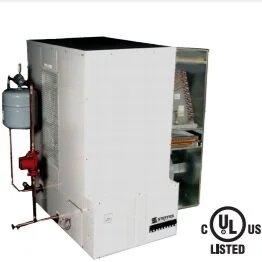
photo credit: Steffes
FAQs
-
Yes. We can help you navigate the process of switching to ETS and direct you to local resources and contractors. We are no longer able to offer financial support for those switching to ETS. Email ets@yukonconservation.ca or join our mailing list for updates on any future developments.
-
To switch your home heating system to ETS, contact one of the following locally trained contractors :
Nancy’s Electric
Fireweed Home Comfort
Midnight Sun Sheet Metal and Heating
Mylner Electric
HVAC North
If you want an ETS space heater (e.g. to provide supplemental heat for a chilly bathroom), you can purchase and self install a room based unit, such as an Ecombi or Steffes 2100 series.
-
Every household is unique, with lots of variables like size (square footage), year built (insulation) and temperature setpoints (personal comfort). Depending on your home and your heating needs, you may (or may not) need any of the following: an energy assessment, electrical service upgrades, and/or a contractor to come install the ETS system.
Two important questions you should consider:
1) Do you want ETS to be your main source of heating, or would it be there to supplement an existing heat source? For example, you may wish to use ETS to supplement your air source heat pump, or you may want an ETS heater to heat up one room or area of your house.
2) Do you want room-based or central furnace-style heating? This decision will likely be influenced by your current heating system. In our study, most people with baseboards chose room-based systems, and most people with forced air furnaces chose central furnace-style systems.
In our study, the average total cost of an ETS system, including all equipment, shipping fees, home upgrades, and installation, was about $12,000 for a room-based system and $27,500 for a furnace-style system. It is important to note that everyone in our study was using ETS as their primary heat source. Costs would be lower for those looking to use ETS as a supplemental heat source.
For many people, the cost of ETS can be prohibitively expensive. One aim of the project was to make contractors more familiar with the technology and therefore lower the costs of installations. We are working with government entities on securing upfront rebates to mitigate the financial barrier of installation. We are also working with the electrical utilities on ongoing incentives for individuals who are utilizing off-peak electricity to heat their homes.
If you have had an energy assessment, get in touch with us, and we can give you a rough idea of costs based on what we have learned from our project.
-
Using off-peak electricity helps to decrease carbon emissions, but because the utility does not yet have different rates for off-peak electricity, switching to ETS will likely not lower your electric bill. We are hopeful that in the coming years, the utility will implement discounted rates for overnight electricity usage, lowering the cost of off-peak electricity and thereby making ETS more economical.
The government does not currently provide ETS rebates, but we are advocating for upfront rebates and ongoing incentives. These conversations have been positive, and we will update this page with any new developments on that front.
To learn about the rebates, grants, and loans available for other energy retrofits, such as improved insulation and air source heat pumps, check out the Canada Greener Homes Grant and the Yukon Government’s Good Energy rebates.
-
ETS heaters convert electricity into heat, similar to how a toaster warms bread - both use electricity to heat up metal wires. Heat pumps do not convert electricity into heat. Instead they extract existing heat from outside air (yes there is some warmth in the air even on cold days!) and pump that warm air inside your home. Heat pumps are more energy efficient because they only need electricity to move existing heat around rather than to generate heat. However, they typically draw energy at peak times, meaning the electricity they use has a higher proportion of fossil fuels than off-peak electricity. ETS heaters draw their heat at off-peak hours, so they use more energy than heat pumps but that energy has a lower proportion of fossil fuels.
-
We think both of them working together is the most intriguing option. Through the ETS Demonstration Project, we had 7 homes that were heated with a combination of air source heat pumps and ETS. On average days, a heat pump can heat your home with low-electricity heat, and the ETS can serve as backup for particularly cold days when the utility is more likely to burn more fossil fuels at peak times. There are some ETS units that can be attached to a heat pump, which would combine the benefits of the heat pump’s efficiency with ETS’s off-peak energy storage.
-
In a word: storage. Both heaters convert electricity into heat, similar to how a toaster warms bread - they use electricity to heat up metal wires. A baseboard heater immediately releases that heat into your home because it has no way to store it. Therefore, baseboards contribute to the winter peak, which is when the utility burns a higher proportion of fossil fuels.
ETS heaters can store the heat they produce. They draw their electricity at off-peak hours, which takes advantage of renewable energy on the grid and lowers the demand for electricity at peak times. This helps the utility to rely less on fossil fuels.
So, even though the two types of heaters are both electric, ETS heaters have a lower carbon footprint.
-
Yes. Similar to space heaters, these units, such as the Ecombi and Steffes 2100 series, would be suitable for heating a small space or providing supplemental heat. They aren’t powerful enough to heat large rooms or heat your home on their own. You can purchase them and self install. If you want advice on whether these would be a good fit for your home and heating needs, feel free to email us at ets@yukonconservation.ca.
-
ETS heaters have the advantage over other heaters during power outages. Depending on what time the power went out, the ETS can provide heat to your home for a number hours after the power goes out.
-
It depends. If you’re looking to self-install a room-based unit as a space heater (e.g. to provide supplemental heat to a chilly bathroom), you are likely in the clear, though you may want to run the idea by your landlord first. The advantage there is that you could potentially bring the heater with you if/when you decide to move. For larger installations, the decision would be up to your landlord. Want help talking to your landlord about ETS? We can write a letter on your behalf advocating for ETS. Email us at ets@yukonconservation.ca.