Mining Challenges and Threats Are Greater Than Ever
The challenges and threats ahead are greater than ever before. The Number One issue is new Yukon mineral legislation that is being developed by Yukon and First Nations. Under the new Yukon government, there has been no opportunity for voices to speak up for the public interest or the environment.
Mining Challenges and Threats Are Greater Than Ever
The Yukon Conservation Society has limited staff and volunteer capacity to speak on behalf of the Yukon environment, wildlife and wilderness. This comes at a time when the challenges and threats ahead are greater than ever before.
We must therefore do all we can to increase that capacity, through funding from governments, the Yukon public, supportive organizations and charities. At the same time, YCS should also form working relationships with other groups and organizations, including First Nations, to advocate for the environment and the public interest in a collaborative way that makes wise use of scarce resources.
The Number One Issue: New Yukon Mineral Legislation
The Number One issue is new Yukon mineral legislation that is being developed by Yukon and First Nations. Under the new Yukon government, there has been no opportunity for voices to speak up for the public interest or the environment. YCS was involved in the process under the previous government. YCS must provide substantive input into new mining laws that could be good, or as bad as ever. We must also press to have opportunities for significant public consultation as every Yukon community is affected.
Our goal must be to have new legislation that respects the Yukon environment, and that does not perpetuate for the next 126 years a regime where mining has more rights than everyone else.
Eleven More Big Files
1. Upcoming water board hearings of the proposed 13-year heap leach operation known as Coffee Gold, owned by Talamore Mining Corp. (formerly Fuerte Metals Corporation) which is banking on a 43% rate of return.
2. Possible sale of the Eagle mine, formerly owned by Victoria Gold Corp., to an unknown foreign mining company. The Yukon public has every reason to be distrustful of both the mining industry and government regulators given the recent environmental disaster at the heap leach operation near Mayo.
3. Eagle mine disaster accountability. To date, more than two years after the largest environmental disaster in Yukon history, no one has been charged in relation to the disaster let alone convicted and punished. There has been no public inquiry. There must be accountability, which would have the added benefit of sending a message to others who may harm the environment.
4. Water Board hearings for the ABM project, formerly called Kudz Ze Kayah (“heart of the caribou”) which threatens the Finlayson Caribou Herd and is opposed by the Ross River Dena Council, while being identified by Canada as a major project for investment under the “Canada Strong” banner.
5. A YESAB panel review – the first in history – of the proposed Casino Mine, which in scale and size is larger than the entire Yukon economy. This process alone is expected to take several years and cost millions.
6. A five-year review of the Yukon Environmental and Socio-Economic Assessment Act and process. This will require substantive input from YCS, which has considerable experience and knowledge to provide in the quest to improve the process that was created by First Nation Final Agreements and is supposed to ensure “sustainable development” as defined in those agreements.
7. More new mines proposed in the same area as Casino and Coffee Gold – White Gold, Carmacks Copper and others – all of which are near the historic Yukon River. Major transportation routes being established for new mines are opening a previously untouched area of the Yukon, creating a further set of environmental issues to address. Add to this the proposed mine at MacTung, the abandoned mine at Cantung and others not in the Yukon but on its border with the NWT.
8. Abandoned mines. The continuing tragic story of failed mines that were abandoned by their owners, leaving the taxpayer to clean up the mess. It’s not a pretty picture. YCS must be involved to actively watchdog and ensure the environment is protected.
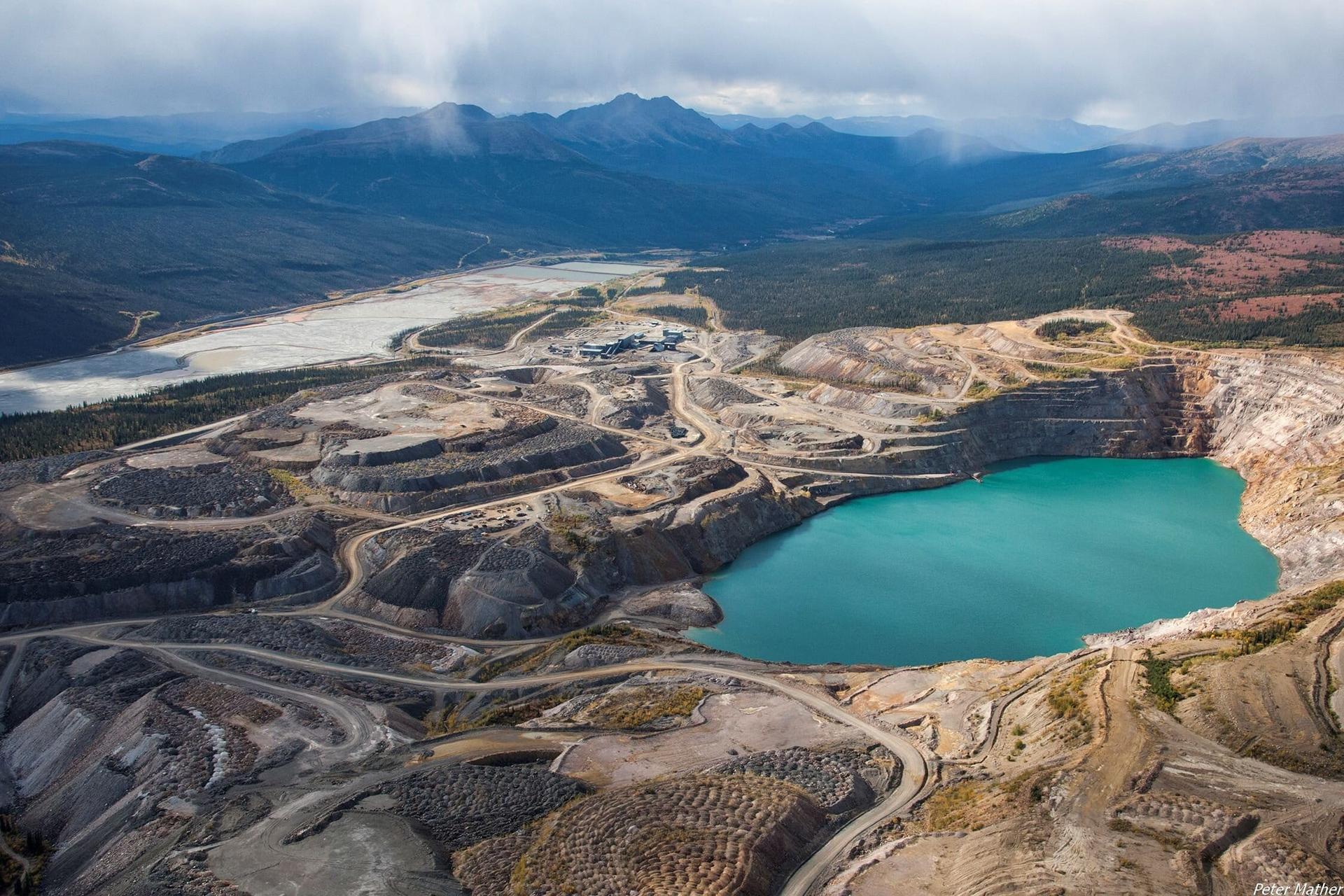
9. Faro mine remediation. In a category of its own, the Faro mine, abandoned in 1998 by its former owners Curragh Resources Inc., is a massive environmental problem that has been in “care and maintenance” ever since, at a cost in the hundreds of millions. Scheduled to move into a remediation phase in 2029, the project will deal with hundreds of millions of tons of waste rock in a 15-year remediation project followed by 20-25 years of testing. Cost? More than five billion dollars ($5,000,000,000). YCS has to be involved as an environmental watchdog.
10. Mineral exploration in “The Wilderness City.” The Gladiator issue has galvanized public opinion about mineral exploration and development in Whitehorse. The City’s new proposed draft Mineral Exploration and Development Framework needs YCS’s scrutiny and input, in partnership with concerned residents of the city.
11. New federal law in Canada, known as Bill C-39, threatens to undermine environmental processes and consideration of First Nation rights and environmental impacts. The government in Ottawa wants "one project, one decision, in one year." Yukoners want to know what this means to the legal requirements for a fair environmental assessment in this jurisdiction.
Governments’ Lopsided Support Of Mining
As with the previous Yukon Liberal government, the support for environmental interests compared to those of the mining industry is lopsided under the new Yukon Party government.
According to the Yukon government’s main estimates for budget 2026-27, the YCS is able to receive $50,000 for the year to provide input into public processes such as YESAA, the water board and land use planning; that sum is clearly inadequate. The mining industry, on the other hand, gets a whopping $792,000 (see table, attached).
YCS must work to convince YG to make things fair and TO level the playing field. Despite its admittedly pro-mining stance, the new governing Yukon Party, now that it is in power, has a duty to take all interests into account in order to make fair, balanced decisions on behalf of the Yukon public. It cannot do that if the lopsided support for mining continues.
Meanwhile, the Government of Canada offers no support for YCS, a long-serving northern environmental organization. YCS must press Canada and lobby for funding adequate to the task.
Similarly, for multiple energy, climate change and land use planning processes, YCS is underfunded. The organization is often asked to provide comment but is unable to do so due to limited capacity.
The imbalance is contrary to most people’s sense of fairness. It is incumbent on the Yukon and federal governments to ensure the playing field is level, so that an industry which has billions at its disposal cannot have more say than those fighting to protect irreplaceable wilderness. This must translate into funding equivalent to industry’s so the environment and the wilderness values treasured by Yukon people are fairly and adequately represented.
The History of Bad Mining in the Yukon
While many Yukoners are fond of the memory of the Klondike Gold Rush and the symbol of the independent miner panning for gold, they are tired of the litany of environmental disasters linked mainly to recent hard rock mining. From Faro to Wolverine, taxpayers are paying a high cost to clean up after the miners.
The facts speak for themselves, as set out in reports of the Auditor General of Canada, the Yukon’s Public Accounts, academic studies and other reputable sources.
There has been no net benefit to our economy and territory from 126 years of mostly irresponsible hard rock mining. While there are examples of responsible mining, the evidence is overwhelming that the mining industry has cost the government and the taxpayer more than it has gained. The industry has left behind a trail of environmental messes, abandoned mines, remote location garbage sites and gigantic taxpayer liabilities that will last for eternity. While many Yukon people, businesses and communities have earned money from the economic activity, they do not support irresponsible companies whose mines are abandoned whose operations pollute or otherwise harm the environment.
Yukoners value the wilderness and environment highly. The Yukon deserves the best new mineral legislation in the world - to protect what we all value most: world-class clean water, air and untouched wilderness, all things that every day are becoming more rare and precious, and by any measure will increase in value in coming decades and centuries.
YCS must be equipped to speak effectively so the public interest and the interest of our environment are protected for the next 126 years and beyond. Future mining projects in order to be approved must demonstrate a clear net benefit to the Yukon with the best environmental safeguards imaginable. Government and industry cannot be trusted to get it right.
Background
Abandoned Mines - Type II per Devolution Transfer Agreement
(financial responsibility of the federal government, administered by Yukon Government):
1. Faro
2. Keno Hill
3. BYG Mount Nansen
4. Ketza River
5. Clinton Creek
6. Viceroy Brewery Creek
7 Minto
Abandoned Mines - Type I
The Devolution Transfer Agreement designated six Type I sites, including Sä Dena Hes, and expressly released Canada from remediation responsibility for them at devolution. Private reclamation obligations remained separate; any taxpayer exposure depends on the operator’s ability to pay, available security and the government’s actual intervention
1. Western Copper
2. Dublin Gulch
3. Mount Skukum
4. La Forma
5. Sa Dena Hes
6. Kudz Ze Kayah
Abandoned Mines that the Yukon is responsible for:
1. Wolverine
2. Minto
3. Ketza River
4. Wellgreen
RE: Sa Dena Hes Mine
This short-lived mine north of Watson Lake operated for 16 months from 1991 to 1992. Initially owned by Curragh Resources, which also owned the Faro Mine, it now is owned by Teck Corporation, which is managing the property and paying for maintenance since reclamation.
YCS Mining Committee - November 2026